Silicon Poaching: How the AI Boom Is Turning Gaming's GPU Engineers Into Enterprise Tech's Most Wanted Talent
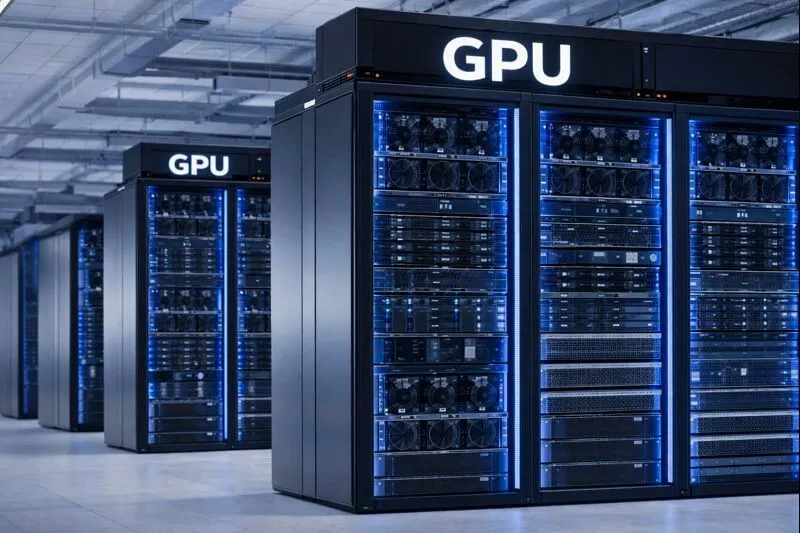
Photo: GPU hardware engineering team data center AI computing, via it-valley.com
The engineers who spent years coaxing maximum frame rates from consumer graphics cards did not expect to become the most aggressively recruited professionals in enterprise technology. Yet that is precisely the situation unfolding across the US technology sector, as the explosive demand for AI computing infrastructure collides with a hard ceiling on the number of engineers who genuinely understand how to extract performance from graphics processing units at a deep level.
Gaming studios built that expertise over decades. Enterprise tech now wants it—urgently, and at nearly any price.
Why GPU Knowledge Is Now Critical Enterprise Infrastructure
For most of the computing industry's history, GPU optimization was a specialized discipline with a narrow commercial application: making games look and run better. The skillset required—parallel processing architecture, shader programming, memory bandwidth management, low-level hardware communication—was valuable within gaming but had limited portability to the broader enterprise world.
The generative AI inflection point changed that calculus permanently. Training large language models, running inference at scale, and managing the computational demands of AI-integrated enterprise applications all depend on GPU performance in ways that traditional software engineering training does not adequately address. Data centers that once ran on CPU-centric architectures are being rebuilt around GPU clusters, and the engineers capable of optimizing those environments are in dramatically short supply.
What enterprise tech companies discovered, often through their own recruiting processes, is that the professionals with the deepest practical GPU optimization experience are disproportionately concentrated in one industry: gaming.
The Talent Profile Enterprise Tech Is Hunting
The specific expertise that enterprise recruiters are targeting is not simply familiarity with GPU hardware. It is the applied, performance-obsessed discipline that gaming demands at a professional level.
Graphics programmers at major studios routinely work within brutal performance constraints—a game must maintain 60 or more frames per second on hardware with fixed specifications, leaving no margin for inefficiency. This environment produces engineers who understand memory access patterns, pipeline bottlenecks, and parallelization strategies at a granular level that engineers from other backgrounds often lack.
Renderware specialists, compute shader developers, and engineers with experience in Vulkan or DirectX 12—the low-level graphics APIs that require explicit hardware management—are among the most sought-after profiles. So are professionals who have worked on console optimization, where the fixed-hardware environment demands an even more intimate understanding of the underlying silicon.
For AI infrastructure teams trying to maximize throughput on NVIDIA H100 clusters or optimize inference latency for production deployments, that background is directly applicable in ways that were not obvious until the demand materialized.
Compensation Escalation and Its Industry Consequences
The salary competition that has emerged from this dynamic is reshaping compensation expectations on both sides of the talent divide.
Gaming studios, which have historically paid competitively within the entertainment technology sector, are finding their compensation structures challenged by enterprise tech and cloud infrastructure companies operating with significantly larger total compensation budgets. Reports from US-based recruiting firms specializing in technical talent indicate that GPU-focused engineers with five or more years of experience are receiving enterprise offers that can exceed their current gaming compensation by 40 to 70 percent when equity and performance bonuses are included.
For gaming studios, the consequences extend beyond individual departures. When a senior graphics engineer leaves, they take with them institutional knowledge that is genuinely difficult to replace—not just technical skill, but the accumulated understanding of how a studio's specific engine, pipeline, and hardware targets interact. The organizational cost of that loss is frequently underestimated until it is felt in project timelines and product quality.
Smaller independent studios are particularly exposed. They lack the financial resources to mount competitive counter-offers and often cannot match the career trajectory narratives that enterprise AI roles can present to ambitious engineers.
The Strategic Response From Gaming Organizations
Some gaming companies are not simply accepting attrition as an inevitability. They are actively restructuring their engineering value propositions to compete on dimensions other than base compensation.
Studio ownership of proprietary engine technology, creative autonomy, and the cultural appeal of working on consumer-facing products that reach tens of millions of players remain genuine differentiators. Several larger publishers have also begun exploring hybrid arrangements—allowing senior GPU engineers to work on internal AI infrastructure projects alongside traditional graphics work—as a way to offer the technical breadth that enterprise roles provide without requiring engineers to leave the gaming industry entirely.
Others are pursuing formal partnership structures with enterprise technology companies, framing collaboration as a way to retain talent by expanding the scope of their work rather than losing them to competitors. These arrangements, when structured thoughtfully, can create mutual value: gaming studios gain access to enterprise-grade computing resources and AI tooling, while enterprise partners gain proximity to GPU optimization expertise embedded in a real-world production environment.
Partnership Structures Worth Considering
For organizations on both sides of this talent divide, the emerging market conditions create a compelling case for structured partnership over pure competition.
Enterprise technology companies that establish formal research or engineering partnerships with gaming studios—rather than simply recruiting from them—gain sustained access to GPU expertise in a context where that expertise continues to develop. Gaming studios operating under these arrangements gain financial resources, infrastructure access, and talent retention leverage that unaffiliated studios cannot easily replicate.
Joint engineering programs, embedded talent-sharing agreements, and co-development initiatives around GPU optimization tooling represent concrete formats through which these partnerships can operate. Several enterprise cloud providers have already begun exploring informal versions of these relationships; formalizing them creates accountability and durability that ad hoc arrangements lack.
The Longer View
The GPU talent migration now underway is not a temporary disruption that will resolve itself as AI investment matures. The computational demands driving this hiring pressure are structural, and the pipeline of engineers with deep GPU expertise will take years to expand meaningfully through traditional education and training channels.
What this means for both industries is that the organizations which treat this as a talent management problem alone will continue to lose ground to those that recognize it as a partnership opportunity. Gaming's hardware engineers are not simply a resource to be recruited away. They represent a body of applied knowledge that both industries need, and that neither can afford to let sit idle or be concentrated in only one sector.
The companies that understand this distinction—and build the cross-industry relationships to act on it—will be better positioned for whatever computational demands the next decade brings.