Beyond the License Fee: How Enterprise Software Is Borrowing Gaming's Revenue Architecture to Redefine Customer Value

Photo: CEphoto, Uwe Aranas, CC BY-SA 3.0, via Wikimedia Commons
For most of its commercial history, enterprise software operated on a straightforward financial premise: sell a license, collect an annual maintenance fee, and repeat. It was predictable, scalable, and — for a long time — sufficient. But as the subscription economy matured and customer expectations evolved, that model began to show its age. Renewal rates plateaued. Expansion revenue stagnated. And product teams struggled to justify continued investment in features that customers had already paid for upfront.
The answer, it turns out, may have been hiding in plain sight — inside the very gaming industry that enterprise tech has long regarded as a separate universe.
The Economics of Engagement: What Gaming Got Right
The modern gaming industry did not stumble into sophisticated monetization. It engineered it, iterating over two decades of direct consumer feedback, behavioral analytics, and relentless experimentation. The result is a revenue architecture that bears almost no resemblance to the boxed-software model it replaced.
Today's major gaming titles generate substantial portions of their revenue not from initial purchase prices, but from what happens after the sale. Downloadable content — commonly known as DLC — extends the product lifecycle by delivering new experiences in discrete, purchasable increments. Battle passes create time-bounded engagement cycles that reward continued participation. Seasonal content drops manufacture urgency and novelty simultaneously. Cosmetic pricing tiers allow players to express identity and status without affecting core functionality.
Each of these mechanisms serves a dual purpose: it generates immediate transactional revenue while simultaneously deepening the customer's investment in the platform. The longer a player engages, the more they spend, and the less likely they are to abandon the product entirely. Customer lifetime value, in other words, is not a metric gaming companies stumbled upon — it is the central organizing principle of their entire commercial strategy.
Translating the Playbook: Early Adopters in Enterprise
A growing number of enterprise software leaders are now applying these principles with notable success. The translation is not always direct — enterprise procurement processes, compliance requirements, and organizational buying behaviors introduce friction that consumer gaming never contends with — but the underlying psychology transfers more cleanly than skeptics initially predicted.
Product leaders at several mid-market SaaS companies have begun structuring their roadmaps around what one CTO described as "content release cadences" rather than traditional version updates. Instead of bundling twelve months of development into a single annual release, their teams ship discrete capability modules on a rolling basis. Some are included in base subscriptions; others are available as optional add-ons at defined price points. The approach mirrors DLC economics almost precisely.
"We stopped thinking about our product as a static deliverable and started treating it as a living platform," explained one product executive at a workflow automation firm based in Austin, Texas. "When we introduced optional capability packs — analytics extensions, integration bundles, reporting templates — our expansion revenue grew faster in the first two quarters than it had in the previous two years combined."
The battle pass model has found its enterprise equivalent in what some companies are calling "innovation tiers" or "early access programs." Customers who opt into these structured programs pay a premium subscription rate in exchange for priority access to new features, dedicated product input sessions, and exclusive configuration capabilities. The time-bounded nature of these programs — typically structured around annual or semi-annual enrollment windows — creates the same enrollment urgency that drives battle pass adoption in gaming.
The Psychology Behind the Pricing
Why do these strategies work across markets as different as consumer gaming and enterprise software? The answer lies less in the specific mechanics and more in the behavioral principles those mechanics exploit.
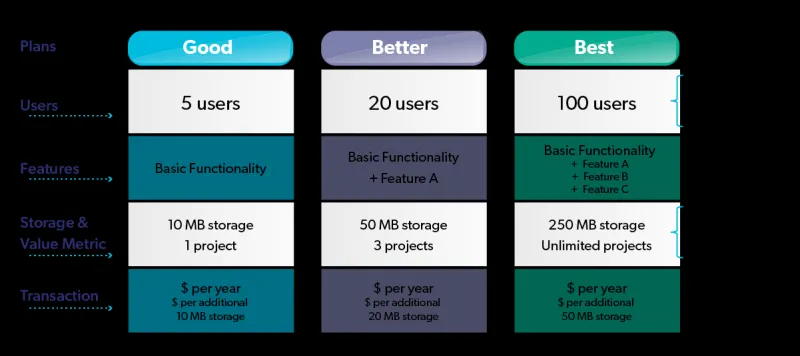
The concept of perceived value segmentation is central to both industries. Gaming companies long ago recognized that different players assign wildly different value to the same experience. A player who derives deep satisfaction from character customization will pay substantially more for cosmetic items than a player who is indifferent to visual presentation. Tiered pricing structures — from base access through premium cosmetics — allow publishers to capture revenue across that entire value spectrum without excluding any segment of the player base.
Enterprise software confronts an identical dynamic. Different organizations derive different value from the same platform. A compliance-focused financial services firm may place enormous value on audit trail functionality that a creative agency finds irrelevant. A modular pricing architecture allows vendors to align price with perceived value at the organizational level rather than forcing every customer into an identical cost structure.
The seasonal content drop model addresses a different psychological lever: novelty and relevance. Enterprise customers, like gaming players, are susceptible to platform fatigue. When a product feels static, engagement declines and competitive alternatives become more attractive. Structured content releases — new templates, updated integrations, enhanced dashboards delivered on a defined schedule — signal continued investment and create recurring reasons for customers to re-engage with the product.
Partnership Implications for the Industry
For organizations operating at the intersection of gaming and enterprise technology, the convergence of these monetization philosophies creates meaningful partnership opportunities. Gaming studios with mature in-game economy infrastructure — including dynamic pricing engines, entitlement management systems, and behavioral analytics platforms — possess capabilities that enterprise software vendors are actively seeking to replicate.
Several gaming technology providers have already begun positioning their monetization infrastructure as white-label solutions for non-gaming software companies. The technical architecture that manages virtual currency economies, DLC entitlements, and seasonal pass access is, at its core, a sophisticated commerce and access control system. That infrastructure is directly applicable to enterprise software contexts where feature gating, tiered access management, and usage-based billing are increasingly common requirements.
For enterprise software companies evaluating this shift, the most immediate partnership opportunity may lie not in technology acquisition but in talent and advisory relationships. Gaming industry veterans who have designed and operated in-game economies at scale carry institutional knowledge that is genuinely difficult to acquire through traditional hiring channels. Engaging those professionals — whether as consultants, advisory board members, or full-time product leaders — can compress the learning curve considerably.
Navigating the Transition Carefully
The adoption of gaming-inspired monetization is not without risk. Enterprise buyers are sophisticated, and pricing models that feel manipulative or extractive can damage relationships that took years to build. The distinction between value-additive modularity and artificial feature fragmentation is not always obvious from the outside, and vendors who cross that line often face significant backlash during renewal conversations.
The most successful implementations share a common characteristic: transparency. Customers who understand the pricing architecture — who can clearly identify what is included in their base subscription and what optional enhancements are available — tend to respond positively to modular offerings. Those who feel that previously included capabilities have been carved out and repackaged as premium add-ons tend to respond with frustration and, eventually, churn.
The gaming industry learned this lesson through painful public examples. Enterprise software is learning it now, with the benefit of that prior experience to draw upon.
The Revenue Model of Tomorrow, Arriving Today
The convergence of gaming and enterprise software monetization philosophy is not a distant trend. It is an active transformation reshaping how software companies structure their commercial relationships, how product teams prioritize development investment, and how finance teams model long-term revenue trajectories.
For industry professionals and organizations positioned at this intersection, the strategic imperative is clear: understand the mechanics, study the psychology, and build the partnerships that make sophisticated monetization architecture accessible. The license fee had a long and productive run. What replaces it will be considerably more interesting.