Community Architects: How Gaming's Guild Masters Are Solving Enterprise SaaS's Churn Crisis

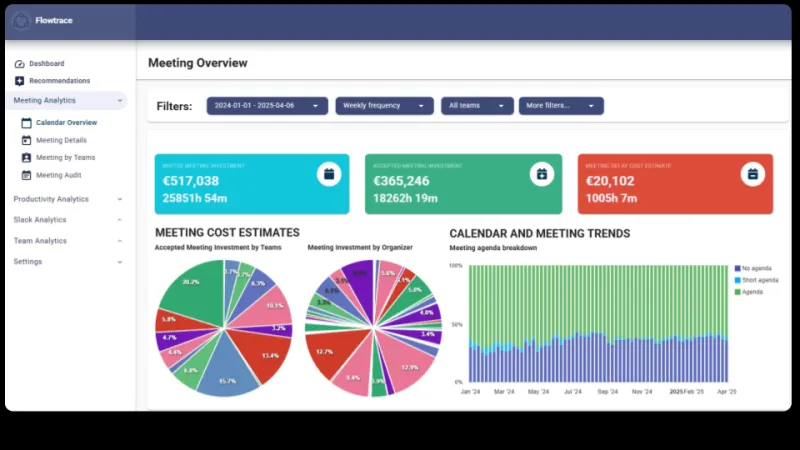
For years, enterprise software companies have treated customer retention as a data problem. They built churn prediction models, scored health metrics, and automated renewal outreach with surgical precision. The results, by most accounts, have been underwhelming. Average annual churn rates in B2B SaaS continue to hover between 5 and 7 percent for established platforms — and considerably higher for mid-market products competing in crowded categories. Something in the formula is broken.
Increasingly, a cohort of forward-thinking SaaS executives is arriving at an uncomfortable diagnosis: the problem was never the data. It was the relationship. And to fix it, they are looking somewhere most enterprise strategists would not have considered five years ago — the community management departments of major gaming studios.
What Gaming Figured Out That Enterprise Software Missed
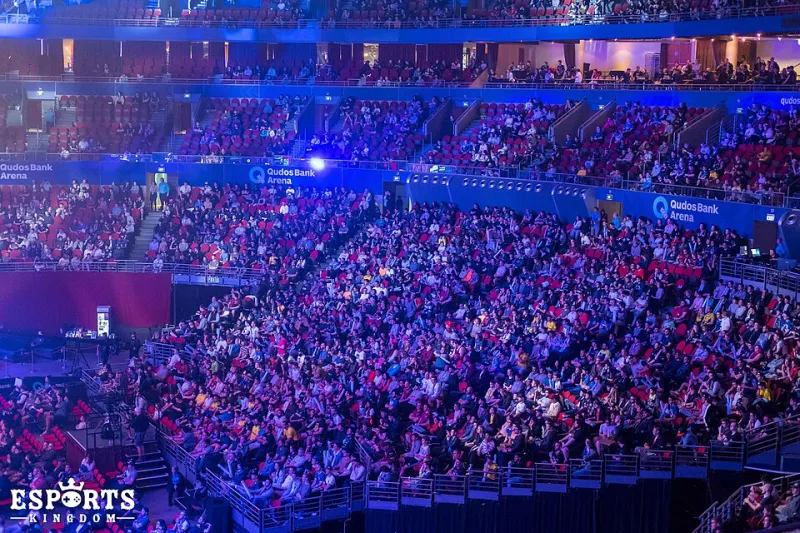
MMORPGs and live-service games have operated under an existential constraint that enterprise software is only now beginning to internalize: players can leave at any moment, for free, with zero contractual obligation. There is no annual contract, no procurement committee, and no switching cost beyond emotional investment. Retention, in that environment, is earned daily.
To survive in that landscape, gaming companies developed a discipline that is equal parts psychology, communications strategy, and organizational design. Community managers became the human interface between the product and its audience — not merely moderating forums, but actively shaping how players perceived their relationship with the game and with each other.
The most sophisticated studios embedded community managers into product development cycles, feeding player sentiment directly into roadmap decisions. They organized player guilds and in-game events that created social interdependence, meaning players stayed not just for the product but for the communities they had built inside it. They communicated transparently during outages and product failures, treating players as stakeholders rather than consumers.
None of this is instinctive behavior for enterprise software organizations. But it is precisely what a generation of gaming community professionals has spent careers mastering.
The Talent Migration Taking Shape Across the Industry
The movement is still early, but it is accelerating. Customer success leaders at several mid-to-large SaaS firms have begun posting roles that explicitly cite gaming or online community experience as preferred qualifications. Some are going further, recruiting directly from studios known for their community management programs — companies whose live-service titles have maintained player bases measured in the tens of millions over multi-year periods.
The appeal is not nostalgia. It is competency. A community manager who spent four years maintaining engagement across a fractured player base of two million users — navigating content droughts, controversial updates, and competitive threats from rival titles — has developed a resilience and relational sophistication that no account management certification program currently replicates.
These professionals understand the mechanics of belonging. They know how to make individuals feel seen inside large systems. They recognize the early behavioral signals of disengagement long before a formal churn event occurs. And critically, they know how to re-engage lapsed users in ways that feel human rather than transactional.
Specific Tactics Making the Transition From Guild Halls to Customer Portals
Several gaming-derived retention strategies are already finding practical application inside SaaS customer success frameworks.
Tiered Community Architecture. Gaming guilds function as structured social hierarchies that give members a sense of progression and belonging. SaaS firms are adapting this model through customer advisory boards, power-user cohorts, and segmented community forums where experienced customers mentor newer ones. The effect is twofold: it deepens engagement among advocates while reducing support burden and increasing product adoption among newer accounts.
Proactive Transparency During Product Failures. Gaming studios learned — often painfully — that silence during server outages destroys trust faster than the outage itself. Community managers who came up in that environment are now applying the same instinct to SaaS incident communications, pushing organizations toward faster, more candid status updates that preserve credibility even when delivering bad news.
Behavioral Signal Monitoring. Live-service games track dozens of engagement signals — session frequency, feature adoption, social interaction rates — to identify players at risk of lapsing before they formally disengage. That same analytical orientation translates directly to customer health scoring, but with a crucial difference: community-trained professionals tend to act on those signals through human outreach rather than automated email sequences, a distinction that measurably affects response rates.
Event-Driven Engagement Calendars. Gaming communities maintain engagement through recurring events — seasonal content drops, community challenges, developer livestreams — that give players reasons to return on a predictable cadence. SaaS organizations are beginning to mirror this structure through quarterly customer summits, product roadmap webinars, and exclusive early-access programs that reward loyalty with genuine privilege rather than nominal discounts.
Why Traditional Account Management Is Losing Ground
Conventional account management in enterprise software is fundamentally transactional. It is organized around the renewal cycle, the upsell opportunity, and the escalation path. Relationships are maintained instrumentally, with contact frequency often dictated by contract value rather than customer need.
Gaming's community management discipline operates on an entirely different logic. Contact is not a function of contract size. Engagement is not reserved for renewal windows. The relationship is understood to be continuous, not episodic — and its health is measured by how the customer feels about the product and the company on an ordinary Tuesday, not just during a quarterly business review.
That philosophical difference is difficult to teach to professionals who were trained inside traditional account management structures. It tends to come more naturally to people who spent years inside gaming communities, where the cost of neglecting a user was immediate and visible in public forums.
Implications for Partnership Strategy in the Gaming-Enterprise Corridor
For organizations operating at the intersection of gaming and enterprise technology — the precise space GG Partners Consortium was built to serve — this talent migration represents a meaningful strategic signal. It suggests that the most durable competitive advantages in enterprise software may increasingly be cultural and relational rather than purely technical.
It also opens a concrete partnership opportunity. Gaming studios sitting on deep benches of experienced community talent have something enterprise software companies genuinely need. Structured talent-sharing arrangements, consulting partnerships, and cross-industry mentorship programs could formalize what is currently happening through informal hiring — and create value for both sides of the transaction.
The organizations that recognize this dynamic early will not simply reduce churn. They will build the kind of customer communities that generate organic advocacy, reduce acquisition costs, and create the social switching costs that contracts alone cannot manufacture.
In gaming, that outcome has a name: a loyal player base. In enterprise software, the stakes are measured in annual recurring revenue. The mechanism for achieving it, it turns out, may be exactly the same.