From Arena to Boardroom: What Enterprise Event Planners Can Steal From Esports Tournament Design
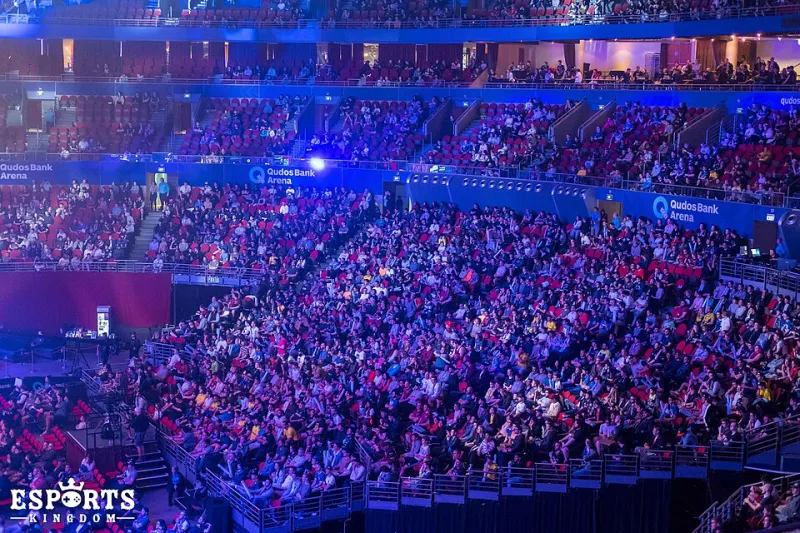
Photo: Esports Kingdom, CC BY 2.0, via Wikimedia Commons
For decades, the corporate conference followed a predictable script: a keynote stage, a breakout session schedule, a cocktail reception, and a sponsor logo wall that attendees photographed exactly once. The format served its purpose. It no longer does.
Meanwhile, esports organizations have quietly built one of the most sophisticated live-event ecosystems in the entertainment industry. Events like the League of Legends World Championship and The International routinely draw tens of millions of concurrent online viewers while simultaneously filling arenas to capacity. Sponsors do not simply place their logos on a banner—they are woven into the broadcast experience through real-time activations, branded in-game moments, and interactive audience mechanics that generate measurable engagement data.
Enterprise technology companies are paying attention. A growing number of Fortune 500 firms and B2B tech organizations are borrowing from the esports event playbook to redesign their own flagship gatherings. The result is a new category of corporate event that feels less like an obligation and more like an experience worth attending.
Why the Traditional Enterprise Event Model Is Failing
The core problem with most enterprise conferences is structural. They are designed around content delivery rather than audience engagement. A speaker presents information. Attendees receive it. The interaction model is essentially one-directional, and the sponsorship framework typically amounts to little more than paid visibility.
The business consequences are significant. Registration rates for in-person corporate events have remained stubbornly below pre-pandemic levels at many organizations. Attendee satisfaction scores have plateaued. Perhaps most critically for B2B companies, the pipeline value generated per attendee has declined as buyers increasingly question whether traveling to a conference justifies the time and expense.
Esports events face none of these problems—and understanding why reveals a clear set of design principles that enterprise event strategists can apply directly.
The Architecture of Engagement: What Esports Gets Right
The foundational difference between an esports tournament and a corporate conference is not production budget. It is intentionality around audience participation.
Esports events are engineered from the ground up to give every audience member—whether physically present or watching on a stream—an active role in the experience. Live polls influence broadcast segments. Viewer predictions generate real-time leaderboards. Chat mechanics allow remote audiences to interact with on-stage moments. The distinction between spectator and participant is deliberately blurred.
Enterprise events can replicate this dynamic without a broadcast studio or a gaming IP. The underlying mechanic is the same: give attendees agency within the event structure, and their investment in the outcome increases proportionally. A product launch that invites attendees to vote on feature naming in real time. A keynote that surfaces live audience questions through a tiered upvoting system. A partner summit that incorporates a competitive challenge format with public scoring. Each of these approaches borrows directly from esports engagement architecture.
Sponsor Activation as Experience Design
In esports, sponsorship is not a passive transaction. It is an experience design problem. When a brand like Red Bull or Intel sponsors a major tournament, the activation is typically integrated into the event's core mechanics—a branded segment, an in-game item drop tied to viewer participation, or a challenge format that carries the sponsor's name into the competition itself.
The contrast with enterprise event sponsorship could not be starker. Most corporate conference sponsors receive a booth, a logo placement, and perhaps a speaking slot. The attendee's interaction with the sponsor is largely incidental.
Forward-thinking enterprise event teams are beginning to redesign sponsorship frameworks along esports lines. This means working with sponsors during the event design phase rather than after the agenda is set. It means creating branded experiences that attendees seek out rather than walk past. A technology sponsor might power a live integration demo that attendees interact with throughout the day. A cloud infrastructure partner might sponsor a real-time performance challenge embedded in a product showcase. The sponsorship becomes inseparable from the event's most memorable moments.
For B2B organizations hosting partner summits or customer conferences, this shift has direct implications for revenue. Sponsors willing to pay premium rates for genuine integration are a materially different conversation than sponsors purchasing logo visibility.
Multi-Platform Presence as a Strategic Imperative
One of the most underappreciated aspects of esports event design is its multi-platform architecture. A major tournament does not have a single audience. It has a live arena audience, a streaming audience distributed across Twitch, YouTube, and proprietary platforms, and a social media audience engaging with clips and commentary in real time. Each audience segment receives a tailored experience, and the event's reach is multiplied accordingly.
Enterprise events have historically treated their digital audience as an afterthought—a livestream of the main stage with minimal additional programming. The esports model suggests a fundamentally different approach: designing the digital experience as a primary audience track rather than a secondary one.
This has practical implications for B2B companies. A partner summit that reaches five hundred people in a hotel ballroom is a different business asset than one that reaches five thousand people across a hybrid event platform with purpose-built digital programming. The pipeline opportunities, the brand impressions, and the partnership conversations that follow scale accordingly.
Building the Post-Event Ecosystem
Perhaps the most instructive element of esports event design is what happens after the final match concludes. Major tournaments generate content that circulates for months—highlight reels, analysis segments, community discussions, and merchandise tied to specific moments. The event does not end when the arena empties. It transitions into a content and community ecosystem that sustains audience engagement until the next event on the calendar.
Enterprise events rarely think in these terms. The conference ends, the recordings are archived, and the next event cycle begins from scratch. The esports model argues for a continuous engagement architecture: events as nodes in an ongoing community experience rather than isolated calendar items.
For B2B tech companies and gaming industry organizations alike, this reframing carries significant strategic value. An enterprise conference that generates twelve months of community content, partner conversations, and audience touchpoints is a fundamentally different business investment than one that generates a week of LinkedIn posts.
The Partnership Opportunity
For organizations operating at the intersection of gaming and enterprise technology, the convergence of these two event models represents a concrete business development opportunity. Esports organizations possess deep expertise in live event production, audience engagement mechanics, and multi-platform broadcast architecture. Enterprise companies possess established customer bases, significant event budgets, and a clear need for differentiated experiences.
The partnership logic writes itself. Studios and esports organizations that have built proprietary engagement platforms, audience participation tools, or event production capabilities are sitting on assets that enterprise event teams would pay to access. The conversation is simply a matter of translation—helping enterprise buyers understand that the technology powering a championship broadcast is the same technology that could transform their next customer summit.
At GG Partners Consortium, we see this as one of the more immediate and actionable partnership categories available to gaming and tech industry leaders today. The enterprise event market is large, the dissatisfaction with existing formats is real, and the esports industry has already solved the underlying design problems. The opportunity is in the connection.