Playing the Long Game: What Enterprise SaaS Can Learn From Gaming's Obsession With Player Lifetime Value
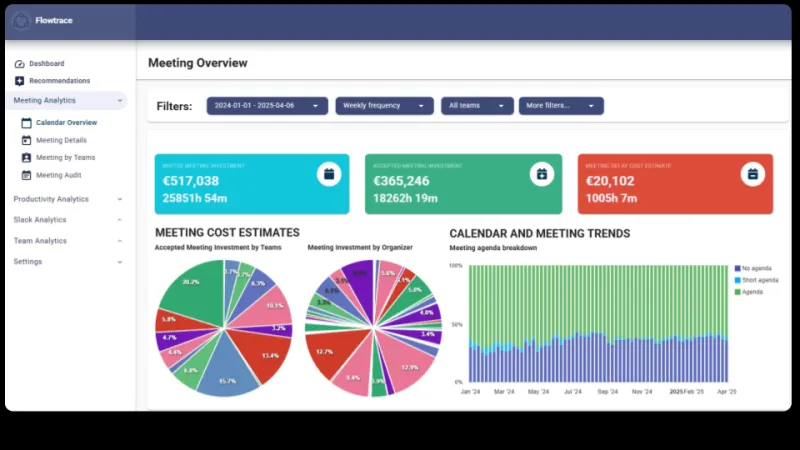
Photo: enterprise software customer success analytics dashboard business meeting, via www.flowtrace.co
For decades, the gaming industry has operated inside a pressure cooker that most enterprise software executives would find unfamiliar. When a player abandons a game, there is no annual contract to fall back on, no renewal conversation to schedule, and no account manager to place a recovery call. The departure is silent, immediate, and financially consequential. That existential reality forced gaming studios to develop some of the most sophisticated customer retention science in any industry — and enterprise SaaS is finally paying attention.
The concept at the center of this shift is player lifetime value, or LTV — a metric that gaming studios have refined into a predictive instrument capable of identifying disengagement signals days or even weeks before a player churns. What began as a revenue optimization tool inside free-to-play mobile studios has quietly evolved into a behavioral analytics discipline with direct applications for enterprise customer success teams struggling to reduce software abandonment rates among their own clients.
Why Enterprise Churn Looks a Lot Like Player Dropout
On the surface, a multinational corporation allowing an enterprise software license to lapse and a mobile gamer deleting an app appear to have little in common. The financial scales differ by several orders of magnitude, and the decision-making processes involve entirely different stakeholders. Yet the underlying behavioral patterns share a striking structural similarity.
In both scenarios, disengagement rarely happens overnight. It accumulates. Login frequency drops. Certain features go unused for extended periods. Engagement shifts from active exploration to passive, habitual interaction — and then to nothing at all. Gaming studios identified this progression years ago and built entire analytics infrastructures around detecting it early. Enterprise SaaS companies, by contrast, have traditionally relied on lagging indicators: support ticket volume, quarterly business review sentiment, and renewal-stage conversations that often arrive too late to reverse a decision already made.
The gap between these two approaches represents a significant competitive opportunity for any enterprise technology organization willing to borrow from the gaming playbook.
The Architecture of Gaming's Retention Science
Understanding what gaming studios actually measure — and how — is essential context for any enterprise leader considering this model. Modern studios track a layered set of behavioral signals that extend well beyond simple usage frequency. Session length, feature interaction sequences, in-app purchase hesitation patterns, social engagement within the platform, and response rates to push notifications all feed into dynamic LTV models that update in near real time.
Critically, gaming studios do not treat all players as equivalent. Segmentation is granular and continuously recalibrated. A player who engages heavily with competitive multiplayer features represents a fundamentally different retention profile than one who gravitates toward narrative content — and the intervention strategies deployed for each are correspondingly distinct. This precision is what separates gaming's approach from the broad-stroke customer health scores that most enterprise SaaS platforms currently employ.
Predictive churn modeling adds another layer of sophistication. By training machine learning models on historical behavioral data from churned players, studios can assign real-time churn probability scores to active users and trigger automated or human-led interventions before the decision to leave becomes final. The accuracy of these models, refined over millions of player interactions, is a capability that enterprise customer success teams are now actively working to replicate.
Translating the Framework for B2B Customer Success
The translation from gaming to enterprise is not a one-to-one exercise. Enterprise software environments involve organizational buyers rather than individual consumers, procurement cycles that span months, and success outcomes tied to business performance metrics rather than entertainment satisfaction. Any responsible adaptation of gaming's LTV methodology must account for these structural differences.
That said, several core principles transfer with relatively minimal modification. Engagement scoring — assigning weighted values to specific user behaviors within a platform — is already gaining traction among forward-thinking SaaS customer success organizations. When calibrated against the behavioral patterns that historically precede churn, these scores function as early warning systems that allow customer success managers to prioritize their attention and resources toward accounts at genuine risk, rather than simply those approaching renewal dates.
Similarly, gaming's concept of re-engagement campaigns — targeted outreach triggered by specific behavioral thresholds rather than calendar schedules — offers a meaningful upgrade over the time-based check-in cadences that dominate current enterprise customer success practice. An account that has gone thirty days without accessing a core feature represents a materially different risk profile than one showing consistent, broad platform utilization, and the response strategy should reflect that difference.
Feature adoption sequencing is another area where gaming's experience proves instructive. Studios have long understood that onboarding a player through a carefully designed progression of feature discoveries dramatically improves long-term retention. Enterprise SaaS companies are beginning to apply analogous logic to their customer onboarding and expansion workflows, identifying the specific product milestones most predictive of long-term contract retention and designing deliberate pathways toward them.
The Partnership Opportunity at the Intersection
For organizations operating within the gaming and enterprise technology ecosystem, the convergence of these two disciplines creates concrete partnership and business development opportunities. Gaming analytics vendors whose platforms were originally built to serve studio retention teams are now positioning their technology for enterprise customer success use cases — and finding receptive audiences among SaaS companies frustrated with the limitations of legacy CRM-based health scoring.
Data science talent with gaming industry backgrounds represents another underutilized asset in this transition. Professionals who have spent their careers building churn prediction models for major studios bring a depth of applied experience in behavioral analytics that is genuinely scarce in enterprise software circles. Organizations capable of identifying and recruiting this talent — or establishing consulting relationships with firms that employ it — gain a meaningful head start in building LTV-informed customer success capabilities.
There is also a compelling case for direct knowledge-sharing partnerships between gaming studios and enterprise SaaS companies, structured around the mutual exchange of retention expertise. Gaming organizations benefit from exposure to enterprise-grade data governance and compliance frameworks; enterprise organizations gain access to battle-tested behavioral analytics methodologies. When structured thoughtfully, these collaborations create asymmetric value that neither party could generate independently.
Redefining What Customer Success Actually Means
The deeper implication of gaming's influence on enterprise customer success extends beyond any specific tool or technique. It represents a fundamental reorientation of how software companies think about the buyer relationship after the contract is signed.
Gaming studios have always understood that the sale is not the destination — it is the beginning of a continuous value delivery obligation. Every design decision, every content update, every community feature exists in service of sustaining and deepening engagement over time. That orientation, applied to enterprise software, produces a customer success philosophy that is proactive rather than reactive, predictive rather than retrospective, and genuinely focused on driving measurable outcomes for the customer rather than simply managing the renewal process.
For US enterprise technology leaders willing to look beyond their immediate competitive set for strategic inspiration, gaming's retention economy offers one of the more compelling models available. The studios that perfected these systems did so under conditions of intense market pressure and zero margin for complacency — precisely the conditions that increasingly define the enterprise SaaS landscape today.